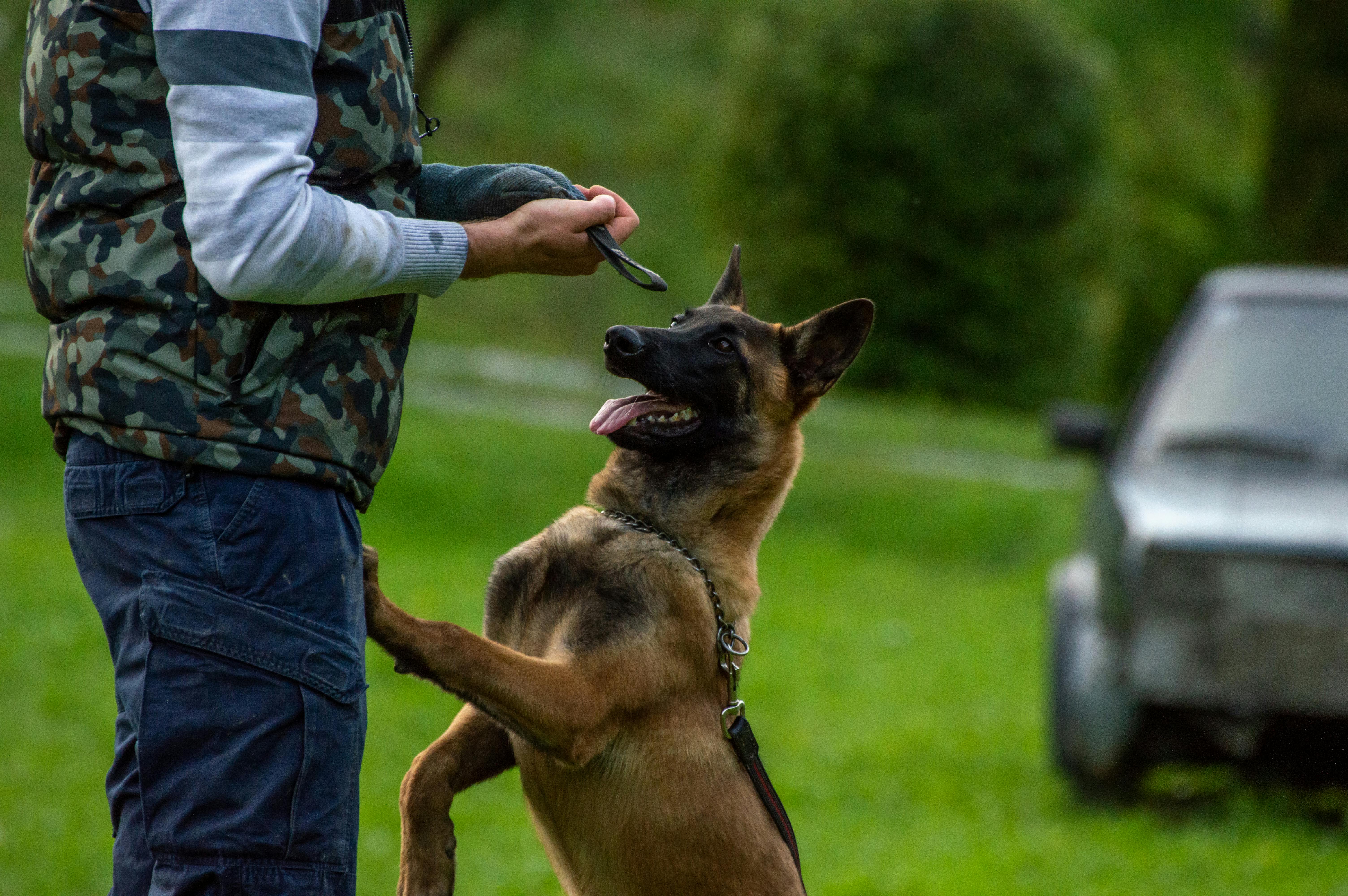
Your dog responds to a familiar cue in the kitchen. Then you try it on a busy sidewalk, and they seem not to hear you at all.
It is easy to interpret this difference as stubbornness or defiance. But inconsistent performance can have a more practical explanation: the situation has changed. The new setting may include unfamiliar sounds, movement, smells, surfaces, routines, or distractions.
Instead of treating each attempt as a test your dog passes or fails, you can examine what changed and make the next practice opportunity easier.
Why “knows it at home” may not mean “can do it anywhere”
Learning a skill in one setting does not necessarily mean a dog will respond in the same way under substantially different conditions. The cue might be familiar, but the surrounding situation may not be.
Consider the difference between these two moments:
- Your dog is in the kitchen, where the floor, sounds, people, and routine are familiar.
- Your dog is outside, where traffic is moving, another dog is approaching, and interesting smells are competing for attention.
The requested skill has not changed, but almost everything around it has.
A missed response does not, by itself, tell you why the dog struggled. It does not establish that the dog is deliberately disobeying, has forgotten everything, or never learned the skill. It is one piece of information about what the dog could do under those particular conditions.
What changes when the setting changes
Before repeating a cue, look at the whole environment. Several small differences can combine to make a familiar task much harder.
Distractions
Possible distractions include:
- People, dogs, or wildlife
- Traffic and other moving objects
- Food smells or discarded items
- Doors opening and closing
- Voices, machinery, or sudden noises
- Play, greetings, or access to valued spaces
What seems minor to you may still be relevant to your dog.
Physical surroundings
The physical setup can also differ:
- Distance from another dog, person, or moving object
- Available space
- Indoor versus outdoor footing
- Narrow paths or doorways
- Lighting, wind, rain, or temperature
- Barriers that limit movement or visibility
Distance is especially worth recording. “In the yard” is less specific than “in the yard, about five metres from the gate while a person walked past.”
The practice routine
Look for changes in how you are asking for the skill:
- Are you standing in a different position?
- Are you using the same verbal cue or hand signal?
- Is your dog wearing different equipment?
- Are you reinforcing the response differently?
- Are you asking after a long walk rather than at the start of practice?
- Are you repeating the cue more often because the setting feels difficult?
You do not need to control every detail. The goal is to notice which details might matter.
Start by observing, not testing
Choose one familiar skill and compare it in two safe settings. Think of this as gathering information rather than proving what your dog knows.
Use a simple observation log:
| What to record | Example |
|---|---|
| Skill | Responding to a familiar cue |
| Location | Kitchen |
| Nearby activity | One person sitting quietly |
| Distance from distraction | No obvious distraction nearby |
| Cue used | Verbal cue once |
| Dog’s response | Responded promptly |
| What happened next | Received reinforcement |
Repeat the observation in a slightly different setting. Record what actually happened rather than assigning a label such as “good,” “bad,” or “stubborn.”
For example:
- Less useful: “Would not listen outside.”
- More useful: “Looked toward a passing dog and did not respond to the first cue from about ten metres away.”
A single attempt is not a complete pattern. Compare several manageable opportunities while avoiding repeated tests in a situation that appears too difficult.
If your dog appears distressed, overwhelmed, or unsafe, stop the exercise or create more distance. Practice should not require remaining in a high-risk environment.
Change one environmental factor at a time
When practical, keep the skill and cue consistent while changing one part of the setup. This makes it easier to identify what may be affecting the response.
A progression might look like this:
- Practise in a familiar indoor room.
- Move to a quiet doorway while keeping everything else as similar as possible.
- Practise just outside during a calm period.
- Try a quiet outdoor area with a mild distraction at a comfortable distance.
This is only an example, not a fixed program. The appropriate steps depend on the dog, the skill, and the environment.
Try to adjust these dimensions separately:
- Location: Move from one space to another.
- Distance: Change how far the dog is from a distraction.
- Duration: Ask for only a brief version of the skill before extending it.
- Distraction: Introduce one manageable source of activity.
If the dog cannot engage comfortably or respond consistently, return to an easier version. That change is not a failure. It gives you information for planning the next attempt.
Make the skill easier before adding difficulty
When a setting is challenging, simplify the practice rather than repeatedly asking for the full behavior.
You might:
- Begin in a low-distraction area.
- Choose a familiar cue.
- Ask for a brief, manageable response.
- Use reinforcement appropriate for the individual dog and situation.
- End before engagement noticeably declines.
- Add only one type of difficulty at a time.
Avoid changing location, duration, and distraction level all at once when you are trying to understand why a response changed. If several variables change together, it becomes harder to know which adjustment helped.
Clear setup matters too. Before giving the cue, check whether your dog is able to orient to you and whether the environment feels safe enough for practice. If not, moving farther away or choosing another location may be more useful than repeating yourself.
A practical example: taking a familiar cue outside
Imagine a dog who responds to a familiar cue in the kitchen but becomes absorbed by smells and movement in the yard.
Instead of moving directly from the kitchen to the middle of the yard, the owner could compare a few simpler setups.
Step 1: Confirm the familiar version
Practise briefly in the kitchen under ordinary, calm conditions. Note the cue, response, and reinforcement.
Step 2: Change only the location boundary
Open the door and practise near the threshold. Keep the cue and other parts of the routine as consistent as practical.
If the dog is comfortable and can engage, this provides a useful intermediate step between indoors and outdoors.
Step 3: Move a short distance outside
Choose a quiet time and move just outside. Avoid adding visitors, passing dogs, or a long duration at the same time.
Step 4: Observe before increasing difficulty
If the response changes, record what was happening. A new sound, scent, movement, or change in distance may have affected the attempt.
Return to an easier setup when needed. Regression in a harder environment is information about the current conditions, not evidence of misconduct.
When the issue may be more than context
Inconsistent responses alone cannot establish fear, pain, anxiety, or a behavior disorder. Avoid trying to diagnose the cause from a few missed cues.
Pause practice and seek appropriately qualified help if the change is sudden or includes concerning behavior such as:
- Intense fear or panic-like behavior
- Aggression or escalating threats
- Repeated escape attempts
- Inability to recover after leaving the situation
- A significant and unexplained change from the dog’s usual behavior
- Any situation that creates a safety risk for the dog, people, or other animals
A veterinarian can assess whether a sudden change may have a medical component. A qualified dog training or behavior professional can help evaluate the training setup and develop an individualized plan within their scope of practice.
While seeking support, avoid deliberately returning to crowded or high-risk environments simply to see whether the behavior happens again.
A change-one-factor-at-a-time checklist
For your next practice session, use this short checklist:
- [ ] Choose one familiar skill.
- [ ] Select a safe, familiar starting point.
- [ ] Decide on one environmental factor to change.
- [ ] Keep the cue and requested skill consistent.
- [ ] Record the location and nearby distractions.
- [ ] Note the dog’s response without using blame-based labels.
- [ ] Record what happened immediately afterward.
- [ ] Make the next attempt easier if the dog cannot engage comfortably.
- [ ] Stop if the dog appears distressed, overwhelmed, or unsafe.
Build consistency across realistic settings
Consistency does not require expecting identical behavior everywhere immediately. It can begin with a smaller process: choose one familiar skill, try it in one slightly different but safe setting, and observe what changes.
Change one factor. Record the result. Adjust the next opportunity.
Over repeated, manageable practice opportunities, your notes can help you identify where the skill is working and where the setup still needs to be simplified. The next time your dog responds differently outside, treat that difference as useful information rather than automatic evidence of disobedience.